Satellite operators need ground stations in places that are difficult to establish a presence in. The dish is rarely what takes eighteen months — it is everything underneath and around it.
International capacity stopped being Somalia's constraint some years ago. Getting it the final few kilometres is the part that is civil works, permits and maintenance — and the part everybody would rather somebody else did.
A drought or a flood does not wait for a procurement cycle. Two things decide whether an operation can function in its first two weeks, and both can be arranged faster than most programmes assume.
Most enterprise networks degrade. Air traffic communications do not have that middle state, which changes what you are buying and how you should specify it.
Somalia has the longest coastline in mainland Africa and very little looking at it. Most maritime awareness programmes start with vessel tracking data — which is exactly the dataset that goes quiet when it matters.
Somalia is one of the least measured countries on earth, and has been photographed from orbit every few days for two decades. The gap between those two facts is where most of the useful work sits.
Most satellite service sold into Somalia is operated from a hub on another continent. The physics of that decision are not subtle, and they show up in every application that expects a reply.
Somalia has had a Data Protection Act since March 2023, and a Data Protection Authority to enforce it. Most organisations holding Somali personal data have not changed anything. Here is what the law established, and where the practical pressure falls.
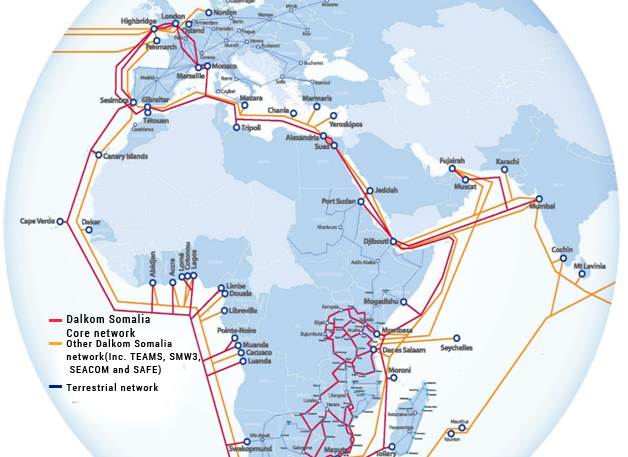
Somalia's National Communications Authority publishes a register of every submarine cable landing in the country, and who operates each landing station. If you are buying capacity, that register settles arguments a sales meeting cannot.