

Four assets. One compound. No third parties.
A submarine cable landing station, a satellite teleport, a Tier III data centre and the fibre that joins them, all on one site on Airport Road in Mogadishu and operated by our own engineers. Everything we sell runs on this. Nothing we sell depends on somebody else’s permission to fix it.
Most providers here rent at least one of these. We own all four.
That is not a boast, it is an operational fact with consequences. Every party that sits between you and the physical layer is another company whose priorities are not yours, and another hand-off in the middle of an outage.
Submarine cable landing station
The point where Somalia’s international capacity comes ashore. EASSy and 2Africa are held directly; WACS and EIG are reached through our shareholding in WIOCC. We draw that distinction deliberately, because a diversity design built on an assumption you were never told about is not a diversity design.

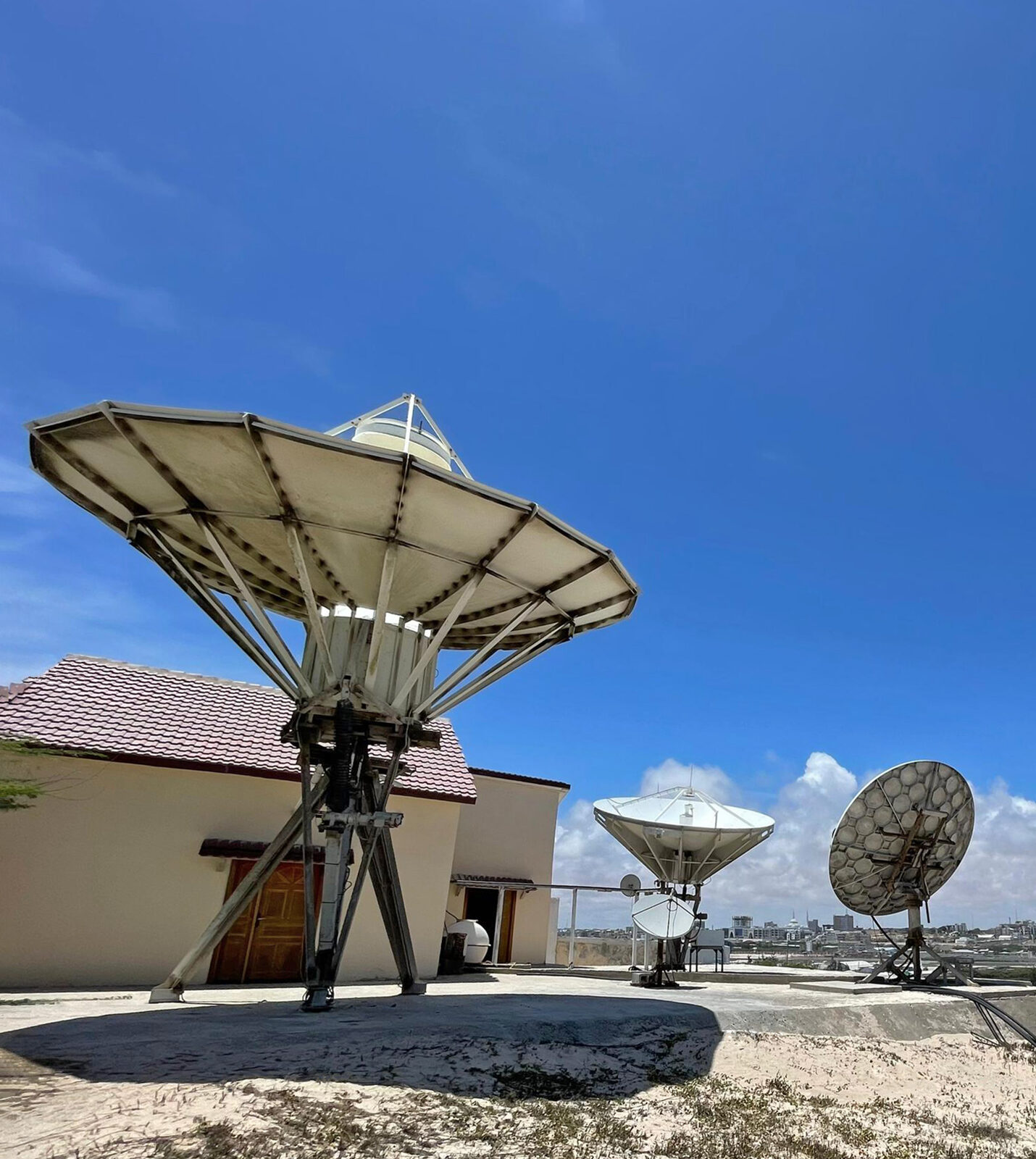
Satellite teleport
C- and Ku-band, on the same ground as the landing station. Almost all satellite service sold into Somalia is resold from a hub in another country, which means the traffic leaves the region before it reaches the internet and the fault ticket leaves with it. Ours does neither.
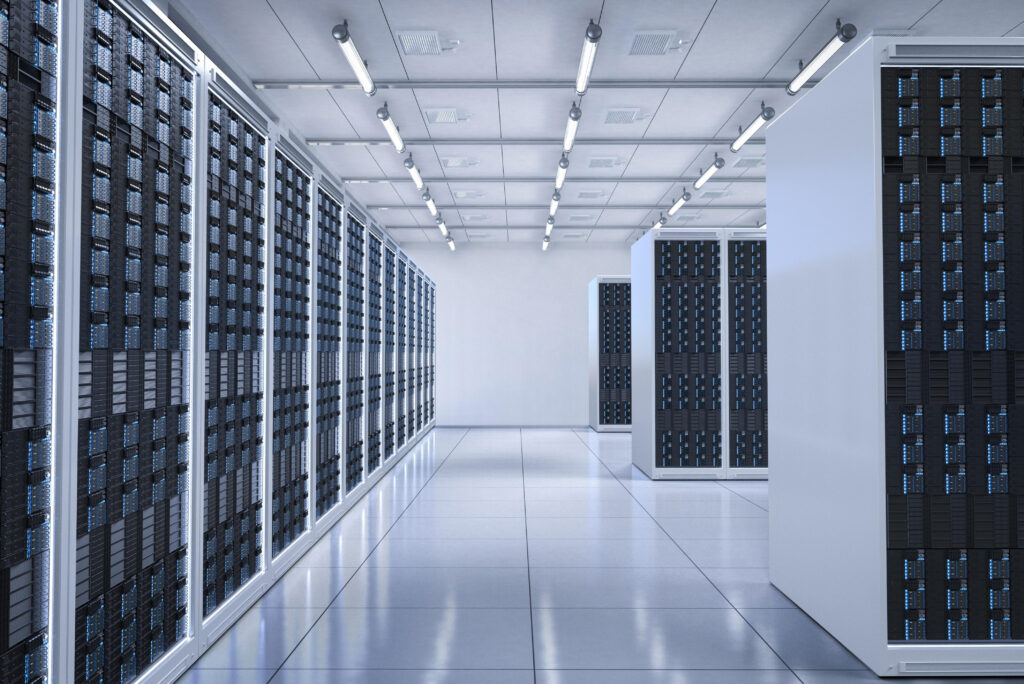
Data centre
One megawatt of Tier III capacity, expandable to two, carrier-neutral by policy, concurrently maintainable, cross-connected to four submarine systems inside the same building. Before it existed, a Somali institution that had to keep records in the country kept them on a server in an office. That was the whole choice.
Backbone & metro fibre
Landing a cable is the easy half. Carrying what comes ashore to the operators, banks, ministries and broadcasters who need it is the hard half, in a country where most of the route has to be built rather than leased. Protected rings rather than single paths, and our own autonomous system rather than transit resold to us.
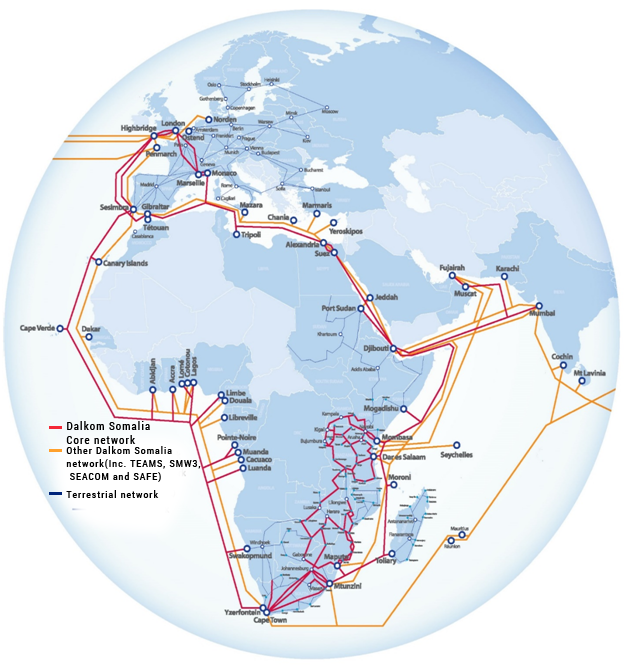
Mombasa metro dark fibre
70 km of our own fibre in the city where East Africa’s submarine cables come ashore, joining the landing stations, the carrier-neutral data centres and the city exchange. Sold as dark fibre to carriers and content providers that want to light their own capacity in Kenya and carry it on to wherever 2Africa and EASSy land, from Somalia and South Africa to Europe, the Gulf and South Asia.
Four assets in one building is an engineering decision
It is also the difference between a fault you can watch being fixed and a fault you can only ask about.
- 01One hand-off, not fourSatellite, subsea, compute and terrestrial meet inside the same meet-me room. Traffic between them never leaves the compound, and never becomes another operator’s ticket.
- 02Diversity you can verifyFour submarine systems on physically separate routes, terminating on equipment we control. You can be shown which path your service takes, and what happens when it fails.
- 03Residency without compromiseRecords stay in Somalia because the rack is in Somalia, with international capacity one cross-connect away.
- 04The engineers live hereRestoration does not wait for a flight, a visa or a regional hub’s working hours. The operations centre is on the same road as the equipment.

What this infrastructure is sold as
The assets above are not the product. These are.
Telecom Backhaul & Wholesale
International and national capacity bought from the party that owns the landing station.
Enterprise Connectivity
Managed circuits between offices, compounds and branches on protected metro rings.
Colocation, Cloud & Data Residency
Carrier-neutral racks cross-connected to four submarine systems in the same building.
Satellite Communications
Coverage beyond the fibre, operated from our own teleport rather than resold from abroad.
The quickest way to judge this is to see it
Tell us what you are designing and we will walk you through the paths it would actually take, and the date each part will be in service.